
Melatonin is a circadian hormone, their synthesis and release is dependent on the time of day as their synthesis is inhibited by daylight. Melatonin levels are normally low during the day, rise during the evening and peak during the early hours. It is most strongly associated with regulating the circadian rhythms and sleep, but it also has an important function in glucose metabolism.
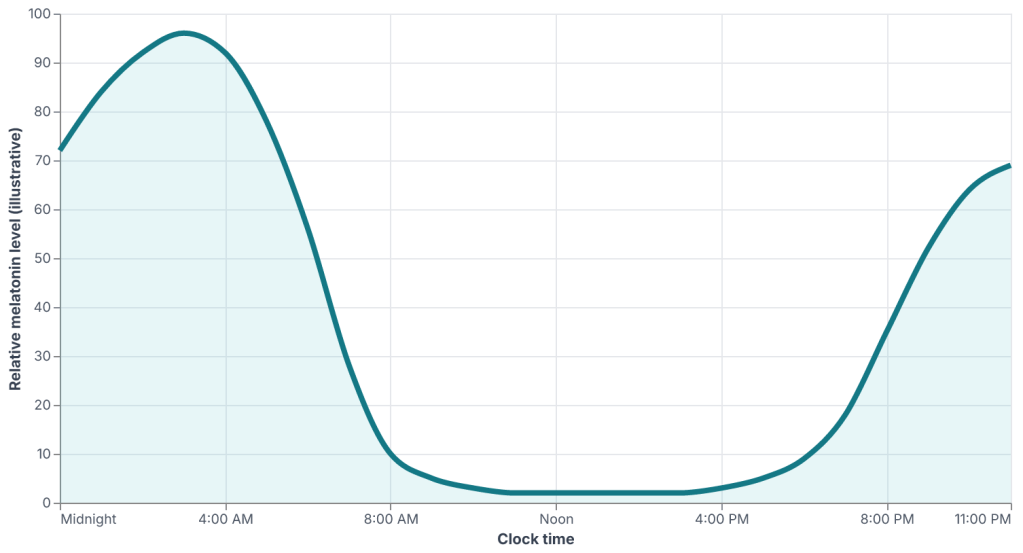
*Produced using Elicit AI – plotted values are normalised and illustrative.
Melatonin binds to two receptors in the pancreas (MT1 and MT2) which result in impaired insulin secretion and associated increased blood glucose response. A gene known as melatonin receptor 1B (MTNR1B) codes for the MT2 receptor and a variation of this gene allele (MTNR1B-G) can lead to over-expression of this receptor and subsequent increased fasting glucose and risk of Type 2 Diabetes (T2D). The prevalence of this gene is seen in populations of European and South Asian descent, although it is worth noting that there are other factors that can influence impaired glucose response such as obesity, pregnancy, meal timing and background genetics (Sparso et al, 2009).
This study (King et al, 2026) aimed to assess whether a dietary intervention of protein-enriched breakfast could mitigate some of the effects of impaired insulin secretion seen in those individuals with the impaired allele; MTNR1B-G. Previous studies have shown that when carbohydrates are eaten with protein the resulting insulin response is higher compared to carbohydrates alone.
Breakfast was chosen as previous research has shown that the impact of MTNRIB-G genotype to be more pronounced within the morning, those individuals that woke and ate breakfast earlier had a higher risk of T2D.
Fifty four adults (aged between 18 – 48 as it is known that young and older adults have significantly different melatonin levels) were given either a carbohydrate rich or protein enriched porridge for breakfast following an overnight fast, postprandial glucose measurements were taken for 2 hours after using a continuous glucose monitor. This was repeated a week later with the alternative breakfast.
Results showed that fasting glucose differed significantly between genotype groups, and the strongest effect was seen following the carbohydrate rich breakfast. This effect was mitigated for those consuming a protein-enriched breakfast, the researchers concluded that adjusting meal composition during periods of elevated melatonin may help improve glucose control and potentially reduce future T2D risk.
Unfortunately, we don’t all yet have access to genotyping facilities but in general those of European and South Asian heritage with a family history of diabetes, based on this and other studies would be advised to consume a breakfast which is protein rich and delay eating carbohydrate rich meals until later in the day to avoid elevated melatonin levels.
References
King A et al. Interaction of melatonin receptor 1B (MTNR1B) genotype and type of breakfast (protein-enriched v carbohydrate-rich) on postprandial glucose response: a randomised crossover trial. Eur J Clin Nutr. 2026;DOI:10.1038/s41430-026-01794-3
Seithikurippu R. Pandi-Perumal, Marcel Smits, Warren Spence, Venkataramanujan Srinivasan, Daniel P. Cardinali, Alan D. Lowe, Leonid Kayumov. Dim light melatonin onset (DLMO): A tool for the analysis of circadian phase in human sleep and chronobiological disorders.Progress in Neuro-Psychopharmacology and Biological Psychiatry, Volume 31, Issue 1, 2007, Pages 1-11,
Sparsø, M.T., Bonnefond, A., Andersson, E.A., NabilaBouatia, -., Naji, Holmkvist, J., Wegner, L., Grarup, N., Gjesing, A.P., Banasik, K., Cavalcanti-Proença, C., Marchand, M., Vaxillaire, M., Charpentier, G., Jarvelin, M., Tichet, J., Beverley, Balkau, Marre, M., Levy-marchal, C., Faerch, K., Knut, Borch-Johnsen, Jørgensen, D.T., Madsbad, M.D., Pernille, Poulsen, Vaag, M.D., Dina, C., Hansen, T., Pedersen, O., & Froguel, P. (2009). The G-allele of intronic rs 10830963 in MTNR 1 B confers increased risk of impaired fasting glycemia and type 2 diabetes through an impaired glucose-stimulated insulin release : studies involving 19 , 605 Europeans.

