
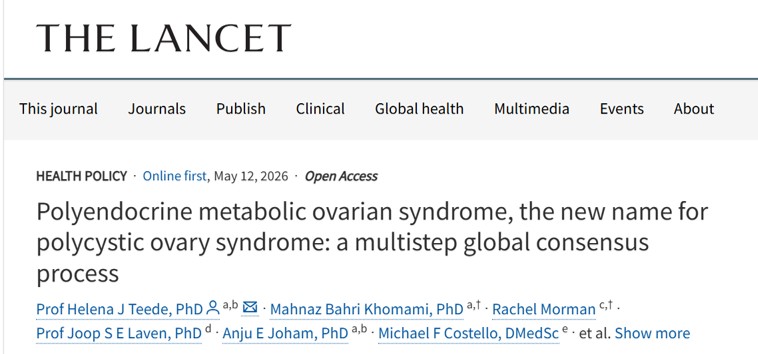
This month marked the official global name change of polycystic ovary syndrome (commonly known as PCOS) to polyendocrine metabolic ovarian syndrome (PMOS) as recently reported in The Lancet (Teede et al, 2026), the transition to the new name will occur over the next three years. To many people this might seem insignificant but for the 10-20% of women worldwide who are affected, it represents a much-needed shift in understanding which will hopefully lead to quicker and more accurate diagnosis (Amiri et al, 2025).
PMOS is a heterogeneous endocrine disorder that emerges at puberty and can lead to a range of symptoms including infertility, sleep apnoea, depression, pregnancy complications, alopecia and metabolic disorders such as glucose intolerance and type II diabetes. Genetics is thought to be the underlying cause with environmental factors thought to play a part in ‘activating’ it (Tay et al, 2023).
70-80% of cases are driven by insulin resistance; defective insulin signalling prevents the normal production of androgen by the ovaries resulting in disruption of follicle growth and ovulation. It was previously thought that this led to an increase in abnormal cysts on the ovaries, but this has since been disproved and instead a broad range of endocrinological disturbances have been identified (Teede et al, 2026).
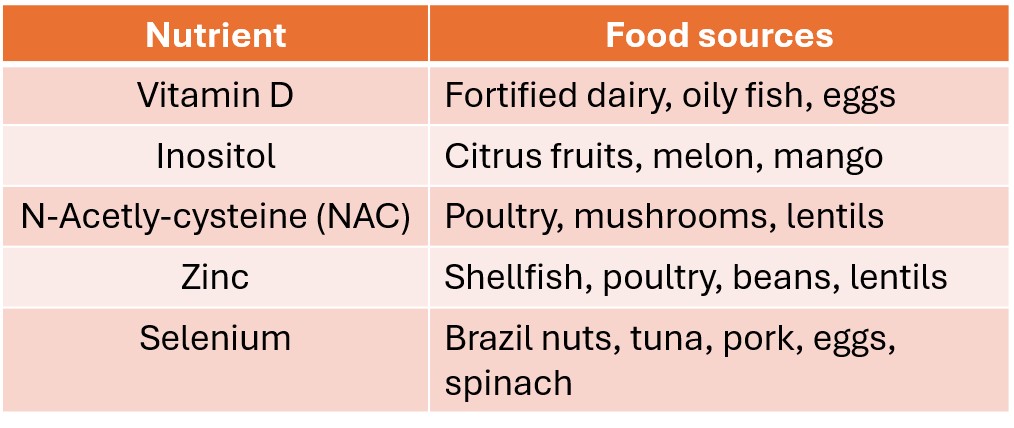
Diet can play an important role in the management of PMOS, eating a Mediterranean style diet high in plant-based foods and low in starchy carbohydrates is recommended (Huntriss, 2023) including foods rich in the following nutrients is also important as they are commonly found to be deficient in those living with PMOS.
References
Amiri et al. The Influence of Study Quality, age, and Geographic Factors on Pcos Prevalence – A Systematic Review and Meta-Analysis. Journal of Clinical Endocrinology and Metabolism, 2025, 19
Huntriss, R. Deliciously Healthy Fertility.
Tay et al. Broadening the Scope of Polycystic Ovary Syndrome (PCOS) Care: Insights from the 2023 International Evidence-Based PCOS Guideline . Seminars in Reproductive Medicine, 2023
Teede HJ et al. Polyendocrine metabolic ovarian syndrome, the new name for polycystic ovary syndrome: a multistep global consensus process. Lancet. 2026;DOI:10.1016/S0140-6736(26)00717-8.

