

A recently published paper investigated the impact of daily diet on sleep quality (Shkolnik et al, 2026), the 4793 participants in the study were roughly half male and female, a mean age of 53 and mean BMI of 26. They collected sleep data via wearable devices and collected dietary logs, making it one of the largest real-world datasets to look at the impact of nutrition on sleep. There were a number of findings, these are nicely illustrated in the figure below.
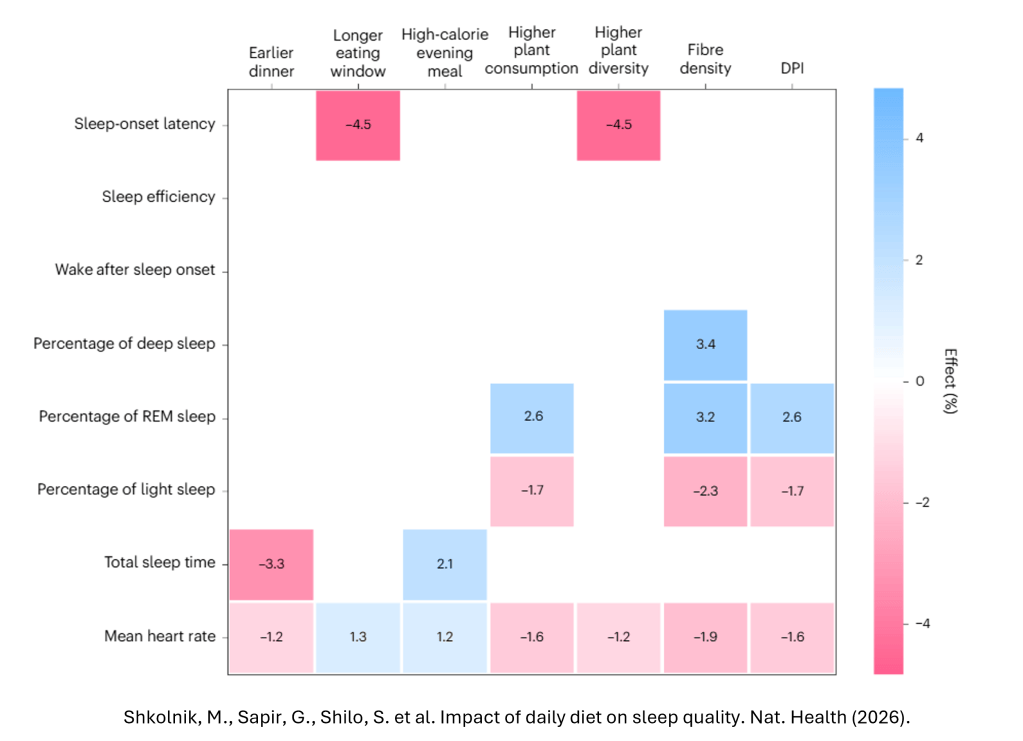
A number of these were significant, the first of which was that eating a more energy dense evening meal was associated with a longer total sleep duration but also resulted in elevated nocturnal heart rates.
Earlier dinner timing correlated with shorter total sleep duration but improved cardiovascular regulation overnight. This data agrees with previous studies that recommend early dinner timing for improved metabolic health, but if your aim is to increase total sleep duration or reduce sleep onset latency (time it takes to fall asleep) then this and other studies suggest that choosing moderate timing before last meal and bed along with a carbohydrate rich meal is a better option.
The other significant finding was that eating a diet containing more plant-based food of high diversity was associated with both a reduced nocturnal heart rate and shorter sleep onset latency. An overall fibre rich diet was also associated with increased deep and REM sleep as well as a reduced nocturnal heart rate.
This data suggests that due to the fact that plant-based diet consistently lowered nocturnal heart rate the influence may be via a different pathway to timing, they hypothesize that this could be due to gut-brain signalling that we know fibre rich food has a strong influence on. The short chain fatty acids produced from fermentation of fibre by gut microbiota could suppress the sympathetic nervous system leading to a lowering of heart rate. Meal timing was seen to modulate the sympathetic response in a dose dependent manner; heart rate increased in proportion to meal size and sleep.
The impact of individual micronutrients on sleep was not significant, some did show consistent positive trends such as magnesium but this was weak compared to the significant and robust effect of fibre-rich plant-based food, suggesting as is widely accepted that nutrients within a food matrix are more effective than any single micronutrient taken in isolation.
In conclusion this study shows that the effect of lifestyle choices such as meal timing and increasing fibre and the plant content of diet can provide immediate and measurable improvements to sleep quality.
References
Shkolnik, M., Sapir, G., Shilo, S. et al. Impact of daily diet on sleep quality. Nat. Health (2026). https://doi.org/10.1038/s44360-026-00182-2

