
Last week I shared ways to help make a visit to the supermarket more economical, this week I’m sharing some general tips that might make eating healthily on a budget easier, all that is required is a bit of organisation and planning ahead.
- Buy items in bulk – if an item you cook with regularly has a long shelf life and is on offer buy as much as you can afford and have space to store! Not only will this save money in the long term, but it will ensure that you always have a well-stocked store cupboard to cook from.
- Meal planning – ensures you only buy what is required, less stress on the day of cooking, more likely to eat a healthy meal.
- Incorporate more meat-free days into your week – substitute with fish, legumes and vegetables, this will improve your health, budget, and support the environment, if you find this difficult start by reducing portion size and aim to minimise over time.
- Cook a more food for dinner and have leftovers the next day – this ensures a healthy lunch with minimal effort and cost.
- Batch cooking – soups, curries, stews, chilli, bolognaise all freeze well, Sunday is a good day to do this and will save time within the forthcoming week when time is restricted (recipe ideas next week).
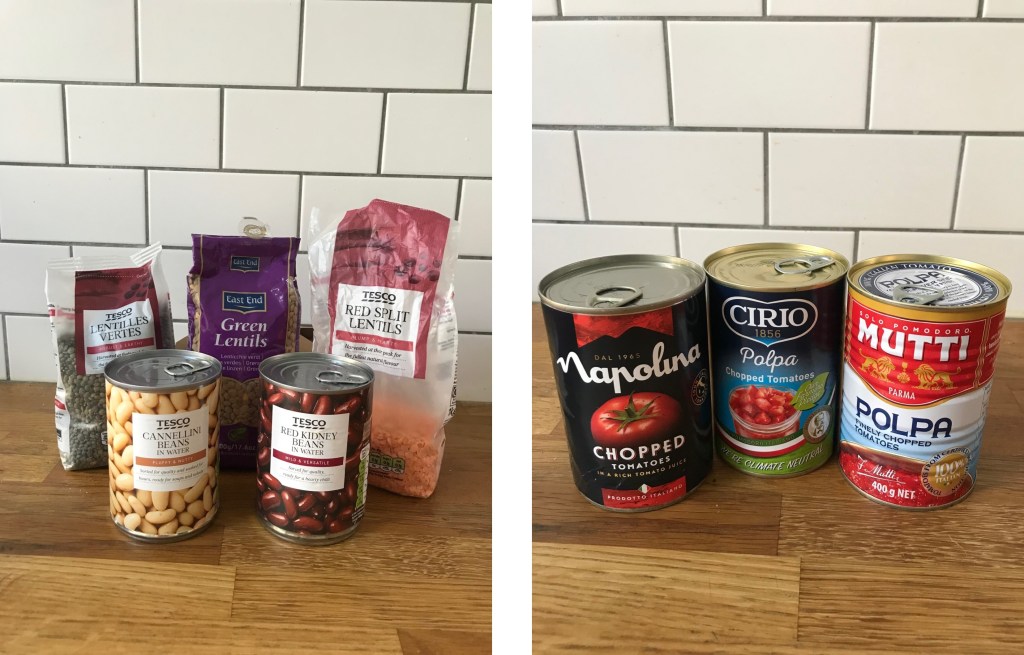
- Use more beans and lentils in your cooking – most food cultures from around the world utilize legumes in their national dishes; Mexican chilli, Italian minestrone, Greek hummus, French puy lentils, Brazilian Feijoada, Indian dahl, too many to mention and for good reason, legumes have a high protein and fibre content, are highly satiating which means they make you feel fuller for longer, are cheap and can be stored very conveniently in dried or canned form.
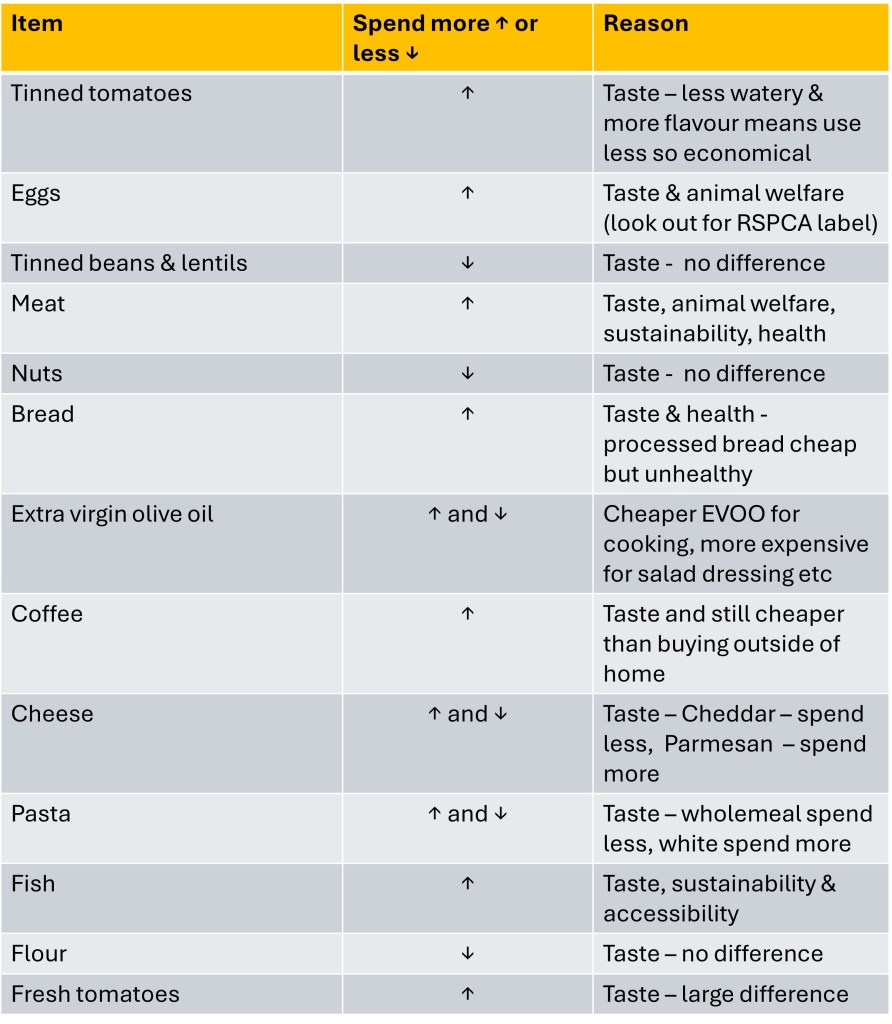
- Carefully choose the items you spend more or less on – this is highly individual and can depend on multiple factors such as taste, animal welfare, sustainability, health, and accessibility, I would encourage you to take the time to work out what matters most to you and have included my personal list in the table below as an example.
- Use frozen, tinned, and preserved fruit and vegetables – cheaper and more convenient than fresh and in most cases with minimal detrimental effect nutritionally (sometimes more nutritious such as frozen peas).
- Buy strongly flavoured cheese and use less – blue cheese, feta, strong cheddar especially can add lots of flavour, for example topping a salad can make it more appetizing and especially good for encouraging children to eat more vegetables.
- Take your own lunch and coffee to work – both considerably more expensive to buy outside the home and can create more opportunity to make poor dietary choices such as sweet snacks and crisps, try to avoid.
- Limit trips to food outlets – try to make the most of the food you have at home and limit food waste, save money, and avoid the temptation to buy unhealthy and unnecessary food.
- Build an armoury of quick and easy go-to recipes – they must be quick, tasty and utilize minimal ingredients, essential to combat the temptation of takeaway/convenience food, everyone is susceptible! (recipe ideas next week)
- Drink tap water – healthiest option and free!
 MLT Nutrition