
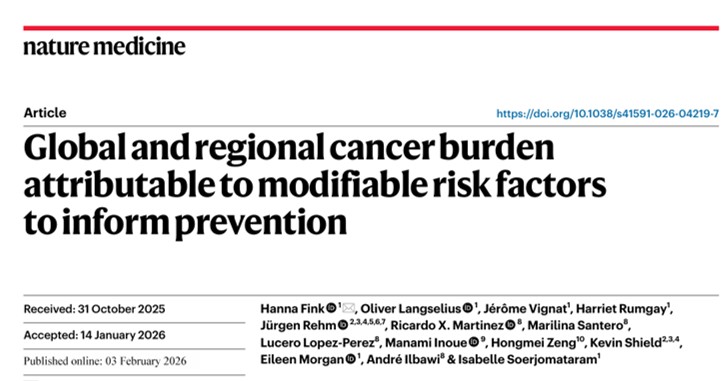
Research carried out by the World Health Organization was recently published in Nature Medicine (Fink et al, 2026), it analysed data from 185 countries and looked at the impact of lifestyle factors (modifiable risk factors) on 35 types of cancer. Data was sourced from the last available year which was 2022 and showed that worldwide 38% of cancers were preventable. Many of these factors are under the control of the individual, they include smoking, alcohol consumption, high body mass index, insufficient physical activity and ultraviolet radiation.
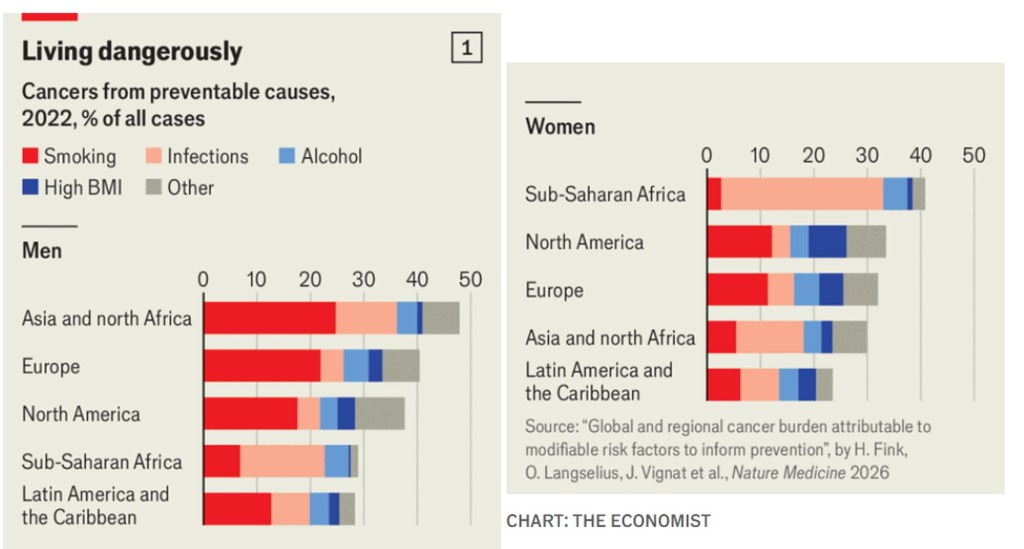
Smoking is still the most common modifiable cause of cancer and shockingly causes one in six of all cancers worldwide. Alcohol and high BMI are also high on the list, especially for women living in North America and Europe where cancers specific to women such as breast and endometrial are high. The increase in alcohol consumption is suggested in part to social and economic changes for example the increased participation of women in paid employment. It is also suggested that the combination of decreased physical activity and increase in prevalence of poor-quality diets in middle to low-income countries are expected to create a further rise in BMI and associated cancers in the future.
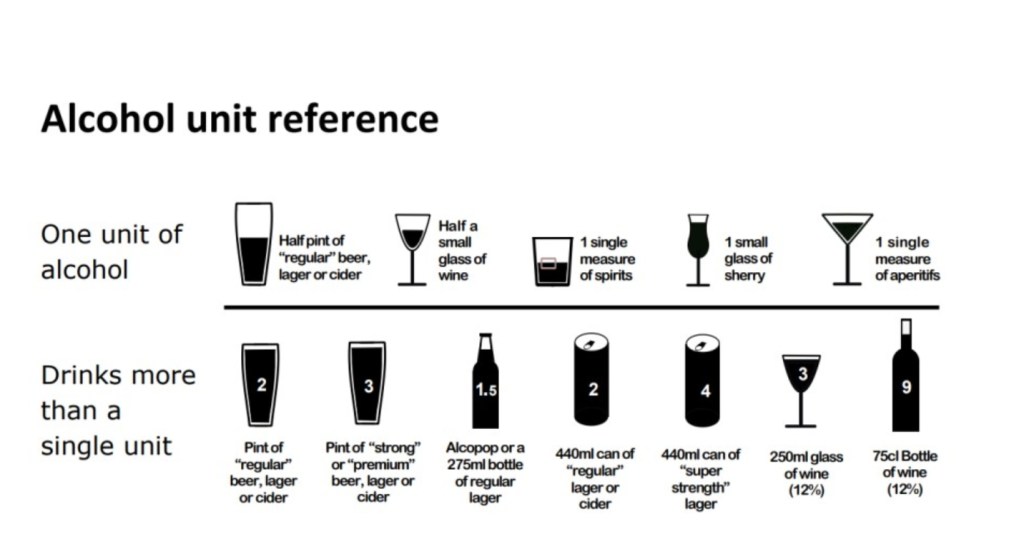
The paper suggests that context-specific prevention strategies are needed that include increasing awareness of how individuals can reduce their cancer risk, alongside campaigns tailored to specific genders that address alcohol, nutrition and physical activity. It’s worrying to see the increased cancer risk linked to alcohol for women, current UK guidelines recommend drinking no more than 14 alcoholic units a week, spread across 3 days or more (NHS, 2026). It’s worth checking the alcohol unit reference guide below and checking your own weekly consumption.
It’s easy for small increments to build up over time, become habitual and in some cases become a dependency. Women have a lower tolerance to alcohol than men due to overall smaller body composition and water content, women also have significantly less gastric alcohol dehydrogenase (ADH) the enzyme that metabolizes alcohol in the stomach, which means more alcohol enters the circulatory system per volume of alcohol consumed by women compared to men (Frezza et al. 1990). It’s important to note that in menopausal women enzymes in the liver which facilitate the removal of toxins such as alcohol are less active leading to inefficient clearance of alcohol, this is thought to be due to lowering levels of oestrogen (Tsiokou et al, 2019). This could potentially lead to more negative menopausal side effects such as hot flushes and sleep disturbances as well as a potential increased risk of cancer.
The good news is that all of these effects are ‘modifiable’ which means that as an individual it is within our power to make positive changes that can have a significant impact on our health.
References
Fink, H., Langselius, O., Vignat, J., Rumgay, H., Rehm, J., Martinez, R. X., … & Soerjomataram, I. (2026). Global and regional cancer burden attributable to modifiable risk factors to inform prevention. Nature Medicine, 1-10.
M. Frezza, C. di Padova, G. Pozzato et al. (1990) High blood alcohol levels in women. The role of decreased gastric alcohol dehydrogenase activity and first-pass metabolism. New England Journal of Medicine
NHS. 2026. Better Health. Drink Less https://www.nhs.uk/better-health/drink-less/#alcohol-units-and-guidelines.
Tsiokou, V., Kilindris, T., Begas, E., Kouvaras, E., Kouretas, D., & Asprodini, E.K. (2019). Altered activity of xenobiotic detoxifying enzymes at menopause – A cross-sectional study. Environmental research, 182, 109074 .
 MLT Nutrition