
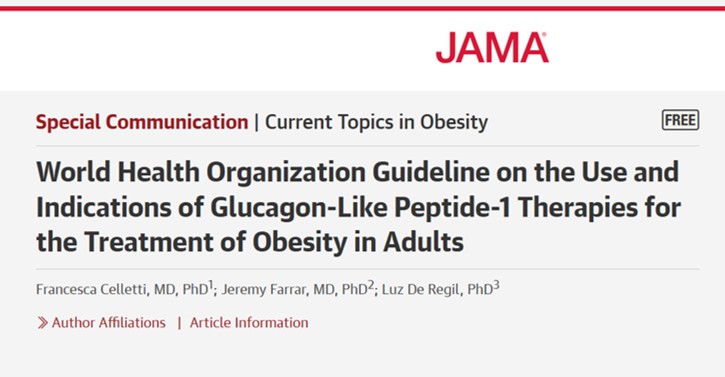
A paper was published this week by the World Health Organization (WHO) outlining guidance regarding the use of the GLP-1 weight loss drugs. This is important as it provides recommendations based on current scientific evidence so that the best possible outcomes for public health are achieved globally.
The paper starts with a shocking statistic; in 2024 there were 3.7 million obesity related deaths from noncommunicable diseases worldwide. The WHO defines obesity as a chronic and relapsing disease and GLP-1 therapies are acknowledged as a welcome treatment for obesity but pointedly as a ‘complimentary’ therapy.
GLP-1 therapy was first approved for weight loss in 2015, since then research has shown multiple health benefits for a broad range of clinical problems from improving cardiovascular health to neurodegenerative conditions. There are currently 12 GLP therapies approved and 40 in development with improved multi-target benefits.
The two recommendations made by the WHO in this paper are as follows:
- Long-term use of GLP-1 therapies for adults living with obesity as a long-term treatment
- Those receiving GLP-1 therapy should receive intensive behavioural therapy (IBT) alongside
It suggests that IBT should include goal setting for both physical activity and diet and should cover energy/calorie restriction, and routine assessment of progress on a weekly basis. This is thought to be the best way to ensure optimum health benefits and sustainability of the therapy. This makes sense as there is a high risk of malnutrition for those receiving GLP-1 therapy due to the consumption of small, nutrient deficient meals.
Both recommendations were graded ‘conditional’ this was due to the fact that desirable outcomes from the GLP-1 therapies don’t always outweigh the undesirable ones. Examples of this include limited data on long term efficacy, safety, titration, maintenance and discontinuation, trials are still ongoing to look at all of these factors. Current evidence shows that significant weight regain is common following discontinuation of GLP-1 therapy, furthermore the regained weight is often disproportionately fat mass rather than lean muscle mass lost during initial treatment (McGowan et al 2025). Other issues include the high cost, inadequate health care systems and equity issues. It’s important that the medication reaches those who need it, current production only covers an estimated 10% of people living with obesity.
The paper ends with a few areas of potential future benefit including the use of ‘therapeutic nutrition’ or food as medicine to enhance the use of GLP-1 therapies, something that I am a big advocate for and look forward to hearing more about in their next review in 2026.
References
Celletti, F., Farrar, J., & De Regil, L. (2025). World Health Organization guideline on the use and indications of glucagon-like peptide-1 therapies for the treatment of obesity in adults. JAMA.
McGowan, B., Ciudin, A., Baker, J. L., Busetto, L., Dicker, D., Frühbeck, G., … & Yumuk, V. (2025). A systematic review and meta-analysis of the efficacy and safety of pharmacological treatments for obesity in adults. Nature Medicine, 1-13.
 MLT Nutrition