
Earlier this month in the UK a campaign was launched by the not-for-profit alliance Veg Power and the charity The Food Foundation to promote the health and environmental benefits of including more beans in our diet.
So, what do we mean by beans? In the context of this campaign, it includes everything under the legumes umbrella. The legume family is made up of a broad category of flowering plants that includes beans, peas and pulses, confusingly pulses are a specific category of legumes because they include only the dried edible seeds of the plant. The term legume is sometimes used interchangeably with pulse, but you can pretty much assume they always mean the same thing.
It’s a bit of a no-brainer when it comes to why you should introduce more beans into your diet, these three facts sum up their benefits (The Food Foundation, 2025):
- HEALTH – beans are naturally low in fat, high in protein, fibre, vitamins and minerals, one portion (80g) is equivalent to one of your 5-a-day.
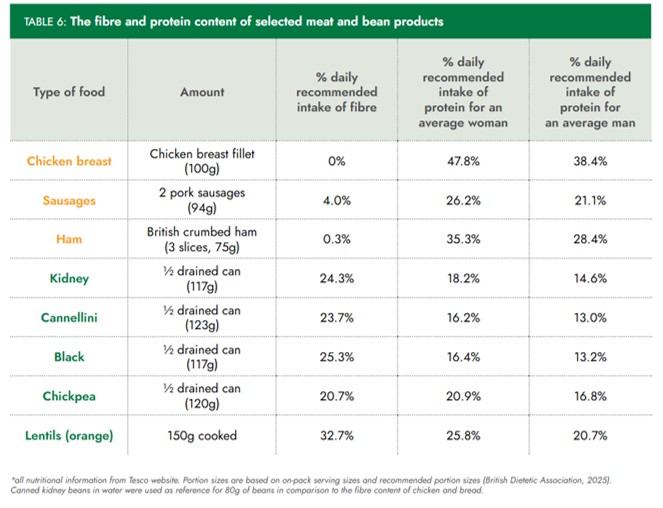
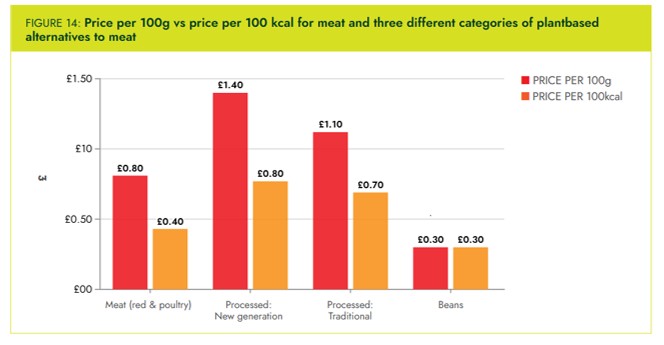
AFFORDABILITY – beans are cheap and convenient. As well as fresh they are available in numerous forms; dried, tinned, jarred, frozen, all with a long shelf life.
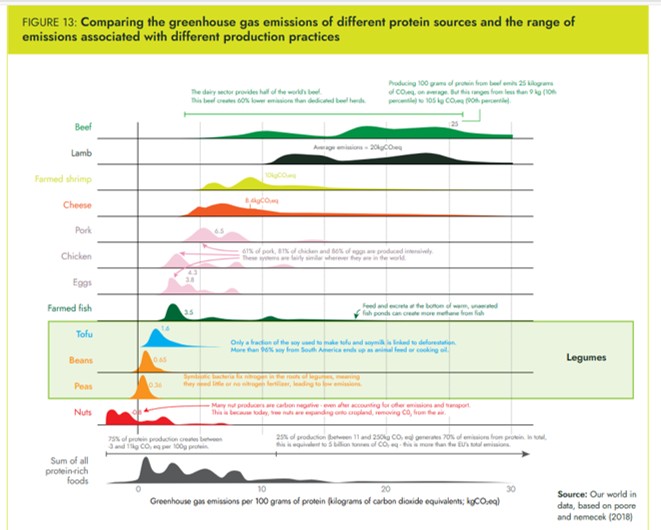
ENVIRONMENT – bean consumption contributes substantially less greenhouse gas emissions (GHGE) compared to the production of meat, 1Kg of beans produces 1.8Kg GHGE, 1Kg of meat produces 99Kg GHGE.
A recent survey carried out by the Food Foundation (The Food Foundation, 2025) showed that the most popular beans in the UK are haricot beans (used in baked beans) closely followed by lentils and chickpeas. These are good choices but the greater the variety the better, each type of bean contains a variety of macro and micronutrients unique to it, here are a few options to add into the mix:
- Kidney
- Soy/edamame (a great choice for menopausal women as they contain high levels of phytoestrogens, compounds with similar chemical structure to oestrogen that evidence has shown can ameliorate some menopausal symptoms (Hu, 2025))
- Black-eyed
- Borlotti
- Butter
- Pinto
- Cannellini
- Broad
There are many ways to include beans in your cooking, it could be as simple as substituting for meat in a chilli, burger or casserole, or making a dip such as hummus, they’re also a great way to add bulk to a simple salad or soup at lunchtime.
References
The Food Foundation (2025), Bean Facts, Available from: https://bit.ly/BeanFacts
Yingjia Hu, Yi Hu, Tai Li, Rengfei Shi. (2025) Clin. Inter. Aging. Beyond Hormone Replacement: Multifaceted Effects of Phytoestrogens for Optimizing Kinesiological and Physiological Adaptations in Postmenopausal Women.
 MLT Nutrition