
The first recorded clinical trial was conducted by a British physician who in the mid-1700’s tried to find a cure for the disease scurvy which was ravaging the British Navy at the time, he set up various treatment groups including cider, vinegar, spices, and oranges and lemons, those receiving the fruits quickly made a recovery and much later it was discovered that a 6-carbon compound contained within citrus fruits was the reason, it was named ascorbic acid which we know more commonly as vitamin C (Whitney, E et al, 2011).
Vitamin C differs from the other water-soluble B-vitamins because it has dual roles, as well as acting as a cofactor it can also act as an antioxidant due to it’s ability to lose electrons easily. It’s antioxidative ability protects the tissues and cells of the body from oxidative stress and strengthens resistance to infection. Vitamin C also prevents iron from becoming oxidated and so enhances it’s absorption, this is the reason why it’s recommended that if you take an iron supplement to take it with a source of vitamin C such as orange juice (BNF, 2023).
A major role vitamin C has as a cofactor is in the formation of collagen, an important structural protein which makes up various connective tissues and forms the foundation of bones and teeth, collagen commonly depletes as we age and this is accelerated for women going through menopause (Calleja-Agius J, 2012). The process of collagen production requires the presence of both iron and vitamin C to act as cofactors, only when they are both present can the process known as hydroxylation occur, without this there can be no collagen production and is a great example of why focusing on the intake of one nutrient in isolation is not useful.
Other ways in which vitamin C acts as a cofactor is the production of certain hormones including thyroxine which regulates metabolic rate and the production of the neurotransmitters serotonin and norepinephrine, both involved in mood regulation (Whitney, E et al, 2011).
The adrenal glands contain the highest concentration of vitamin c compared to other organs of the body, during stress it releases more into the blood stream and this can lead to deficiencies, an example of a stress is exposure to cigarette smoke (Whitney, E et al, 2011).
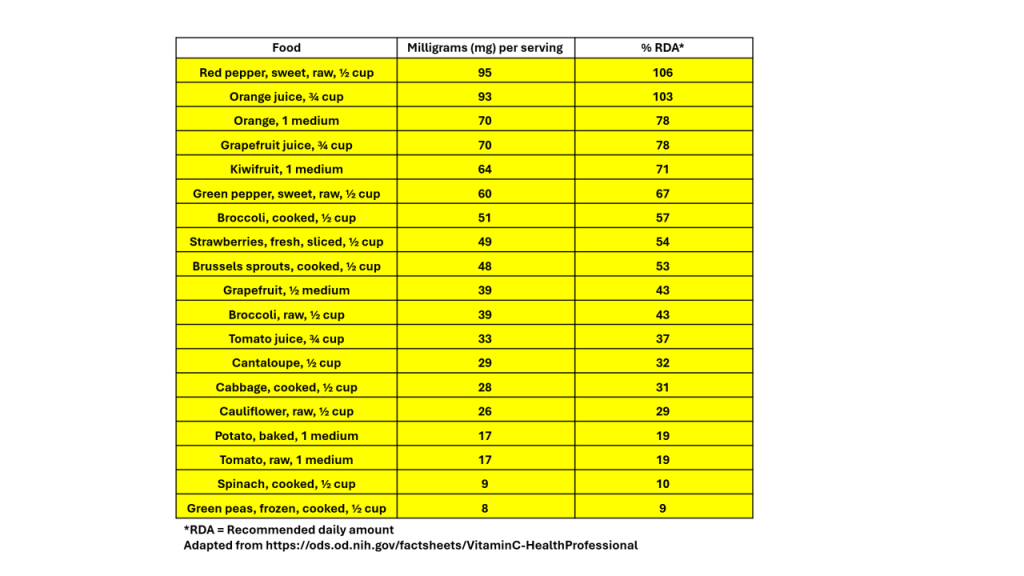
The current daily UK recommendations for vitamin C is 40mg, if you choose to take a supplement taking less than 1000mg is unlikely to cause harm (NHS, 2020), but it is preferable and easy to obtain from diet, shown below is a table of foods high in vitamin C (US Dept. of Agriculture, 2019).
References
British Nutrition Foundation, 2023. Vitamins and Minerals – Nutritional Information
Calleja-Agius J, Brincat M, 2012. The effect of menopause on the skin and other connective tissues. Gynecol Endocrinol. Apr;28(4):273-7
NHS, 2020. Vitamins and minerals – Vitamin C – NHS
U.S. Department of Agriculture, Agricultural Research Service, 2019. FoodData Central Whitney, E et al, 2011. Understanding Nutrition: 2nd Edition
 MLT Nutrition