

Wild garlic is in season within the UK at the moment and can be found in both rural and urban areas, it is typically found growing around trees in shaded areas and produce a pretty white flower and give off a garlic aroma which can be quite potent. I encourage you to forage for these plants, avoid uprooting them, their leaves are easy to remove and the flowers are also edible. If you pick in an urban area, you should wash the leaves, fill a sink with either soapy water or add a Milton sterilisation tablet to it and leave to soak for around 30 minutes, rinse and dry on kitchen roll. It can then be treated as you would any other green leaf, use in salad, sautéed or my favourite as a substitute for basil in pesto.
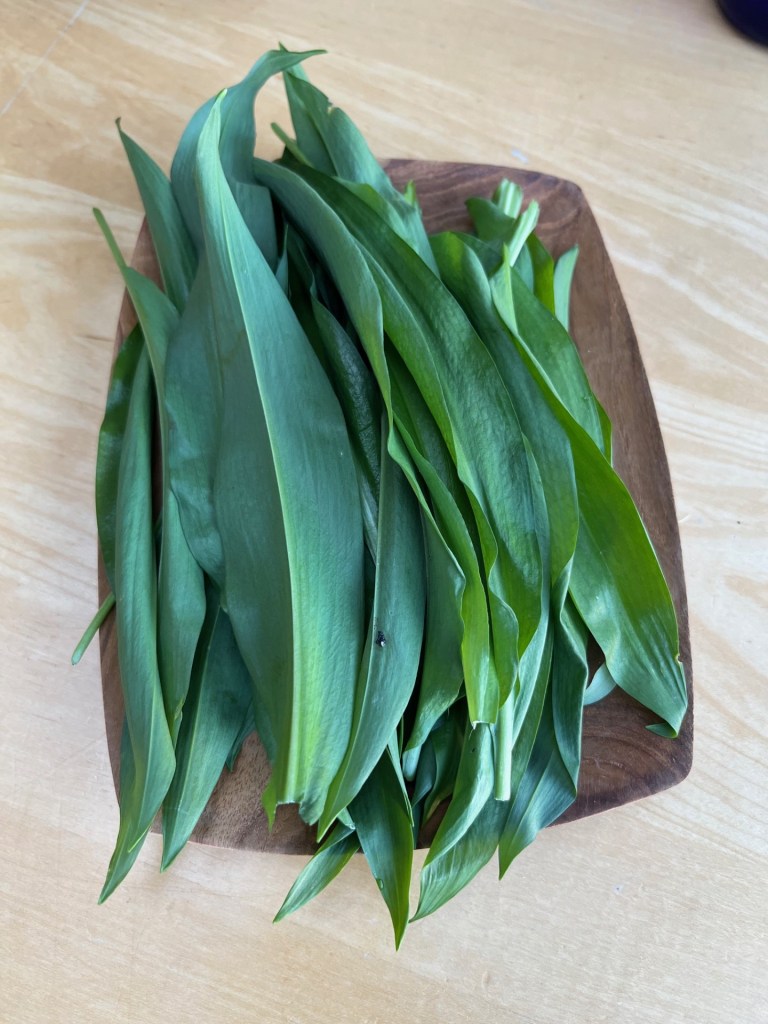
Wild garlic is incredibly nutritious due to it’s highly bioactive content of flavonoids, polyphenols, triterpenoids, chlorophylls and carotenoids, these are known to exert many health benefits including anti-cancer, antioxidant, and anti-inflammatory properties as well as a support to gut health (Voća, 2021). Wild garlic has been used as a form of herbal medicine in many cultures for decades and there is a strong body of scientific evidence supporting it’s therapeutic effect (Moosavi,2016). A recent study showed it’s cardioprotective properties that implicate it’s potential use as preventative/adjunct treatment for cardiovascular disease (Rankovic et al., 2021).
Research has also shown that the leaves are the part of the plant with highest nutritional content when harvested any time between March and June, so now is the perfect time to get foraging (Lachowicz, 2018).
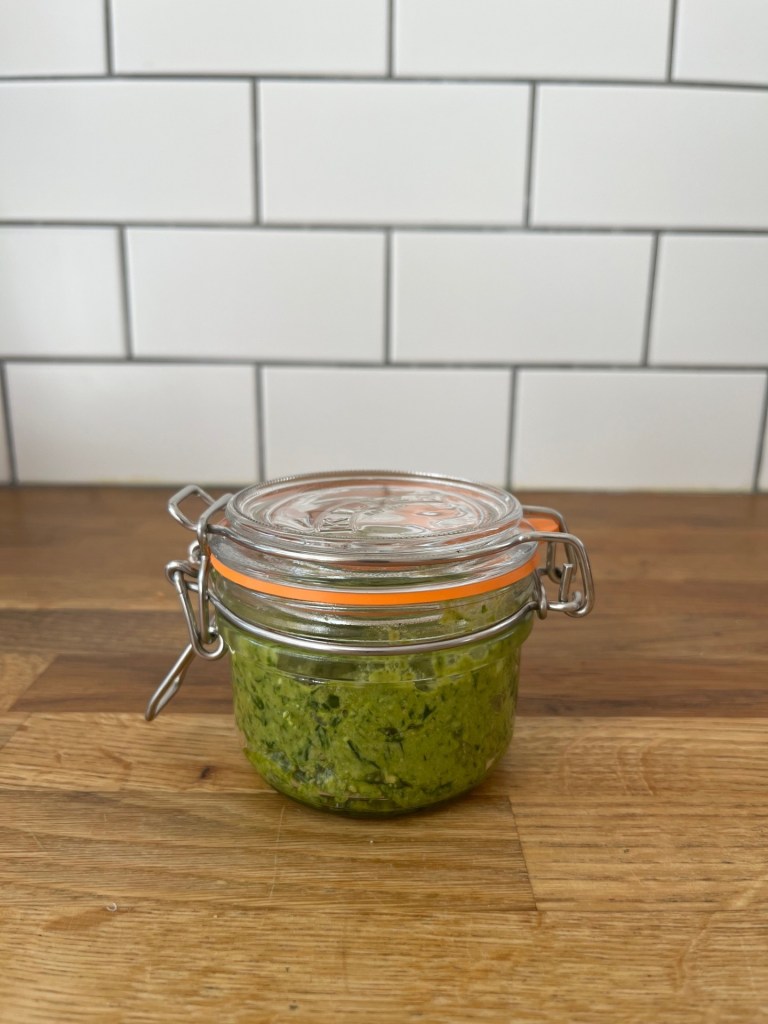
Here is my recipe for wild garlic pesto:
20-30 wild garlic leaves
A handful of walnuts, pine nuts or any unsalted nuts
A handful of finely grated parmesan or any hard cheese
Extra virgin olive oil
Salt & pepper and lemon juice to taste
Roughly chop the wild garlic leaves and add to a mini food processor, add the nuts and cheese, a couple of tablespoons of EVOO and squeeze of lemon juice, mix until a smooth consistency, adding more EVOO when necessary. Season to taste with salt & pepper and lemon.
Stir the pesto through cooked pasta, drizzled on vegetables, salad, mixed with natural yoghurt as a dip or spread on toasted sourdough. It can be kept in the fridge for a few days or frozen.
References
Voća, S., Šic Žlabur, J., Fabek Uher, S., Peša, M., Opačić, N., & Radman, S. (2022). Neglected potential of wild garlic (Allium ursinum L.)—Specialized metabolites content and antioxidant capacity of wild populations in relation to location and plant phenophase. Horticulturae, 8(1), 24.
Lachowicz, S., Oszmiański, J., & Wiśniewski, R. (2018). Determination of triterpenoids, carotenoids, chlorophylls, and antioxidant capacity in Allium ursinum L. at different times of harvesting and anatomical parts. In (Vol. 244, pp. 1269-1280). European Food Research and Technology.
Rankovic, M., Krivokapic, M., Bradic, J., Petkovic, A., Zivkovic, V., Sretenovic, J.,…Tomovic, M. (2021). New Insight Into the Cardioprotective Effects of Allium ursinum L. Extract Against Myocardial Ischemia-Reperfusion Injury. Front Physiol, 12, 690696. https://doi.org/10.3389/fphys.2021.690696
Moosavi, T., Zakavi, A., Hosseinivaliki, F., Fakhar, M., Rafiei, A., Alizadeh-Navaei, R., & Ramezani, A. (2016). Nutritional properties of garlic according to traditional and modern medicine: A review study. Journal of Mazandaran University of Medical Sciences, 26(139), 227-245.
 MLT Nutrition