
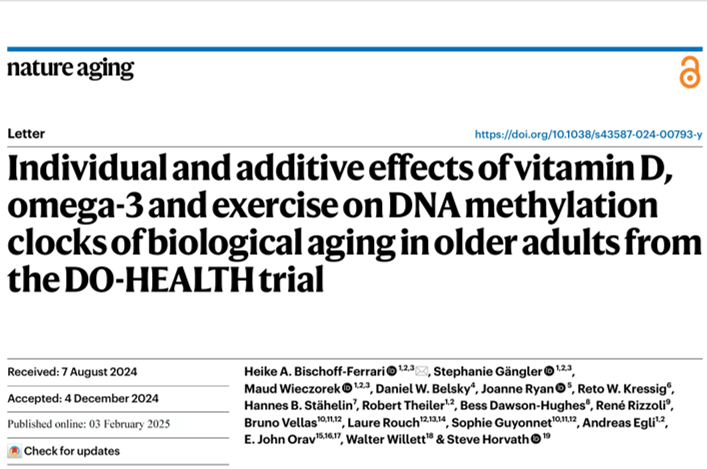
A new publication has shown that a combination of omega-3, vitamin D supplementation and physical exercise can reverse the signs of aging in humans at a molecular level (Bischoff-Ferrari et al., 2025). This study was a randomized controlled trial, which is quite rare in nutrition research (mostly due to ethical reasons) and makes this work all the more compelling. The study included 777 Swiss participants all over the age of 70, just over half were considered healthy and they were all given either a placebo, Vitamin D, Omega-3 and exercise alone or in combination and monitored over a three-year period.
DNA was extracted from collected blood and molecular ageing calculated using what is known as ‘DNA methylation clocks’, these combine information about the epigenetic changes of DNA and use age prediction algorithms to quantify biological ageing. Using multiple clocks meant that multiple aspects of ageing were taken into consideration as each has its own unique form of analysis.
Results from three of the four clocks showed that Omega-3 slowed biological aging over the 3-year period and this effect was further amplified when combined with Vitamin D and physical exercise, overall, the slowing of biological ageing ranged between 2.9 – 3.8 months.
The take home message from this study is further confirmation of the beneficial health effects of Omega-3 intake, it backs up previous observational studies that also show reduced cancer risk (Bischoff-Ferrari et al., 2022), reduced rate of infections (Bischoff-Ferrari et al., 2020) and cardioprotective properties of Omega-3 (see my previous post to find out many more health benefits).
Although this particular study involves supplementation, it is always preferable to consume Omega-3 as part of a whole food for example oily fish, walnuts and chia seeds, but if regular dietary consumption is difficult to achieve for example if you follow a vegan diet, supplementation could be a possible solution, it is recommended that we eat 1-2 portions of oily fish a week which corresponds to 450mg Omega-3, ensure it contains both of the essential constituents Eicosapentaenoic acid (EPA) and Docosahexaenoic acid (DHA) (British Dietetic Association, 2021).
References
Bischoff-Ferrari, H. A., Gängler, S., Wieczorek, M., Belsky, D. W., Ryan, J., Kressig, R. W.,…Horvath, S. (2025). Individual and additive effects of vitamin D, omega-3 and exercise on DNA methylation clocks of biological aging in older adults from the DO-HEALTH trial. Nat Aging. https://doi.org/10.1038/s43587-024-00793-y
Bischoff-Ferrari, H. A., Vellas, B., Rizzoli, R., Kressig, R. W., da Silva, J. A. P., Blauth, M.,…Orav, E. J. (2020). Effect of Vitamin D Supplementation, Omega-3 Fatty Acid Supplementation, or a Strength-Training Exercise Program on Clinical Outcomes in Older Adults: The DO-HEALTH Randomized Clinical Trial. Jama, 324(18), 1855-1868. https://doi.org/10.1001/jama.2020.16909
Bischoff-Ferrari, H. A., Willett, W. C., Manson, J. E., Dawson-Hughes, B., Manz, M. G., Theiler, R.,…Gaengler, S. (2022). Combined Vitamin D, Omega-3 Fatty Acids, and a Simple Home Exercise Program May Reduce Cancer Risk Among Active Adults Aged 70 and Older: A Randomized Clinical Trial. Front Aging, 3, 852643. https://doi.org/10.3389/fragi.2022.852643
British Dietetic Association. (2021). Omega-3. www.bda.uk.com/resource/omega-3.html
 MLT Nutrition