
Mindfulness is a commonly used term that is increasingly misused; the Oxford Dictionary definition is as follows:
- the quality or state of being conscious or aware of something.
- a mental state achieved by focusing one’s awareness on the present moment, while calmly acknowledging and accepting one’s feelings, thoughts, and bodily sensations, used as a therapeutic technique.
Mindful eating therefore encompasses applying the above to the experience of consuming a meal, this primarily involves focusing solely on the food you’re eating with minimal distractions.
Research has shown many benefits of mindful eating these include helping individuals to make better food choices (Hendrickson & Rasmussen, 2017), reducing feelings of guilt and anxiety around food, helping address obesity and weight control issues and an overall healthier relationship with food (Dunn et al., 2018).
Here are a few tips on how to practice mindful eating:
– Create an eating environment that feels comfortable with minimal distractions
– Strictly no screen time whilst eating
– Pay attention and savour the smells, texture and taste of the food
– Focus on the food, think about how it was prepared, where it came from
– Take time to eat, chewing thoroughly before swallowing
– Take regular pauses, monitor how you feel both physically and emotionally
– Try to identify when you’ve eaten enough and are no longer hungry
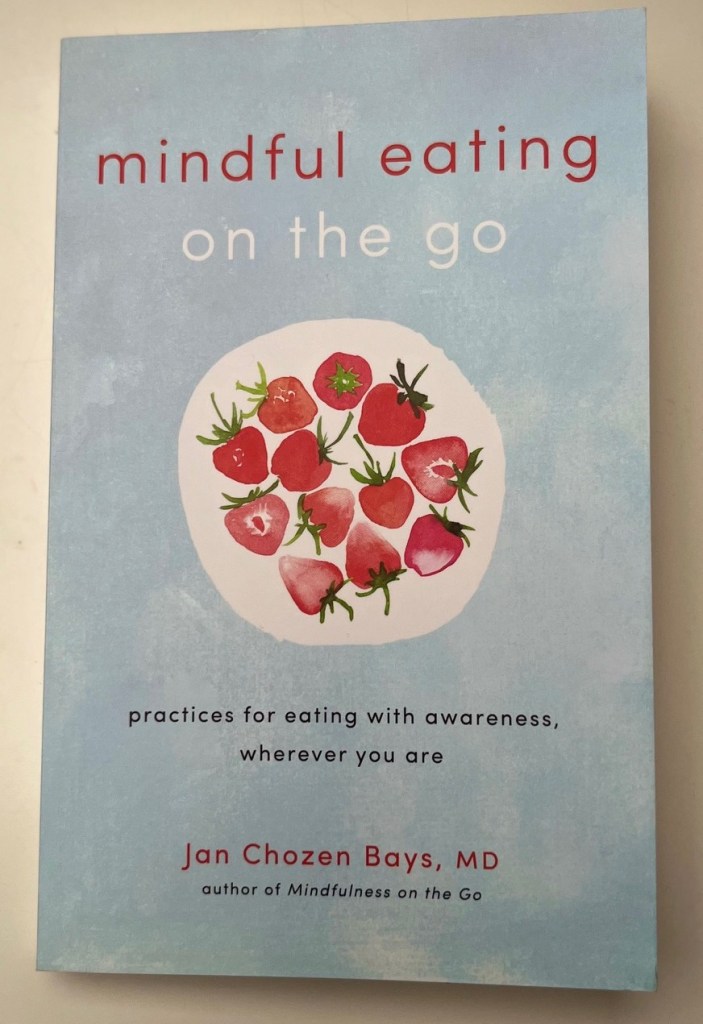
Obviously, this kind of eating can’t be carried out daily but even one mindful meal a week could help improve your relationship with food and give you the skills to practice at other times when in a more chaotic environment. For further reading I recommend the book Mindful Eating on the Go by Jan Chozen Bays.
References
Dunn, C., Haubenreiser, M., Johnson, M., Nordby, K., Aggarwal, S., Myer, S., & Thomas, C. (2018). Mindfulness Approaches and Weight Loss, Weight Maintenance, and Weight Regain. Curr Obes Rep, 7(1), 37-49. https://doi.org/10.1007/s13679-018-0299-6
Hendrickson, K. L., & Rasmussen, E. B. (2017). Mindful eating reduces impulsive food choice in adolescents and adults. Health Psychol, 36(3), 226-235. https://doi.org/10.1037/hea0000440
 MLT Nutrition