
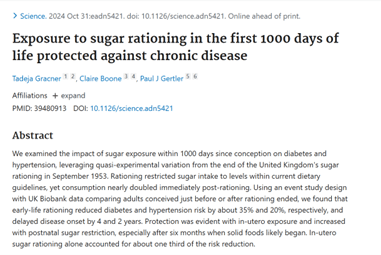
A fascinating new study (Gracner et al., 2024) has just been published that looks at the impact of the end of sugar rationing in post-war Britain in September 1953, when sugar intake almost doubled from levels within current dietary guidelines within the year. Using data from the UK Biobank (a database containing detailed genetic and health data from half a million UK participants) individuals conceived just before and after the end of rationing were compared and it was found that those conceived before rationing had a 35% reduced risk of developing type II diabetes and 20% reduced risk of hypertension, this pattern was also observed for those individuals exposed to less sugar in the womb. A dose-response relationship could be observed whereby as time of sugar rationing increased, risk of these chronic diseases decreased.
These findings reinforce previous work that links nutrition in early life to diabetes risk (Lumey et al., 2024) and confirm the importance of keeping sugar intake during pregnancy and early childhood within healthy dietary guidelines to limit the potential negative effects later in life.
References
Gracner, T., Boone, C., & Gertler, P. J. (2024). Exposure to sugar rationing in the first 1000 days of life protected against chronic disease. Science, eadn5421. https://doi.org/10.1126/science.adn5421
Lumey, L. H., Li, C., Khalangot, M., Levchuk, N., & Wolowyna, O. (2024). Fetal exposure to the Ukraine famine of 1932-1933 and adult type 2 diabetes mellitus. Science, 385(6709), 667-671. https://doi.org/10.1126/science.adn4614
 MLT Nutrition