

Intermittent fasting (IF) is nothing new, throughout history humans have practiced periods of food restriction for various reasons including religious, cultural or disease prevention. It has become popular in recent years due to the introduction of diets such as the 5:2 diet as a weight loss strategy.
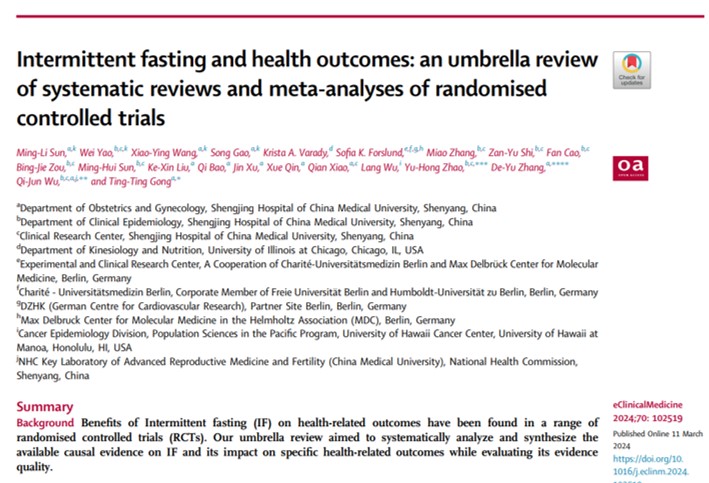
A recent study carried out an umbrella review which combined results from 23 meta-analyses and reviews comparing IF with typical/calorie restricted diets and looked at various health outcomes [1].
The different categories of IF include:
- Zero calorie alternate day fasting (ADF) – alternating days of complete fasting with days of unrestrictive eating
- Modified zero calorie alternate day fasting (MADF) – alternating days of calorie intake (0-600 Kcal/day) for 3-5 days/week
- Twice per week fasting (TWF) – fast for two days (0-600 Kcal/day) and five days of unrestricted eating
- Time restricted eating (TRE) – Fasting for 12-24 hours/day
The health outcomes measured included anthropometric measurements, lipid and glycaemic profiles, circulatory index and others.
They found high quality evidence that supported a positive association of IF with a number of favourable health outcomes, these included a reduction in the following:
- Waist circumference
- Fat mass
- Triglycerides
- LDL and total cholesterol
- Fasting insulin
- Blood pressure
Suggested mechanisms of action include the anti-inflammatory affects of IF which may mitigate insulin resistance and improve glycaemic control, increase resistance to stress and reduce overall inflammation, further investigations to fully understand these processes is required.
Another potential positive impact of IF mentioned within this study is improvements in depressive symptoms, which has been reported by another recent study [2]. This could be explained by potential neuroinflammatory benefits as a result of the metabolic switch that occurs during IF and could result in enhanced nervous system functioning and circadian rhythm regulation leading to improved mood and cognition.
The pros and cons of IF include it’s good safety profile, it could be an effective tool alongside a healthy diet and regular exercise to improve cardiovascular health and used as a potential weight loss aid. It can be a challenge to maintain in the long term and requires considerable lifestyle changes for most people, there are also some reported side effects including headaches, low energy and nausea [1].
References
1. Sun, M.L., et al., Intermittent fasting and health outcomes: an umbrella review of systematic reviews and meta-analyses of randomised controlled trials. EClinicalMedicine, 2024. 70: p. 102519.
2. Fernández-Rodríguez, R., et al., Does intermittent fasting impact mental disorders? A systematic review with meta-analysis. Crit Rev Food Sci Nutr, 2023. 63(32): p. 11169-11184.
 MLT Nutrition