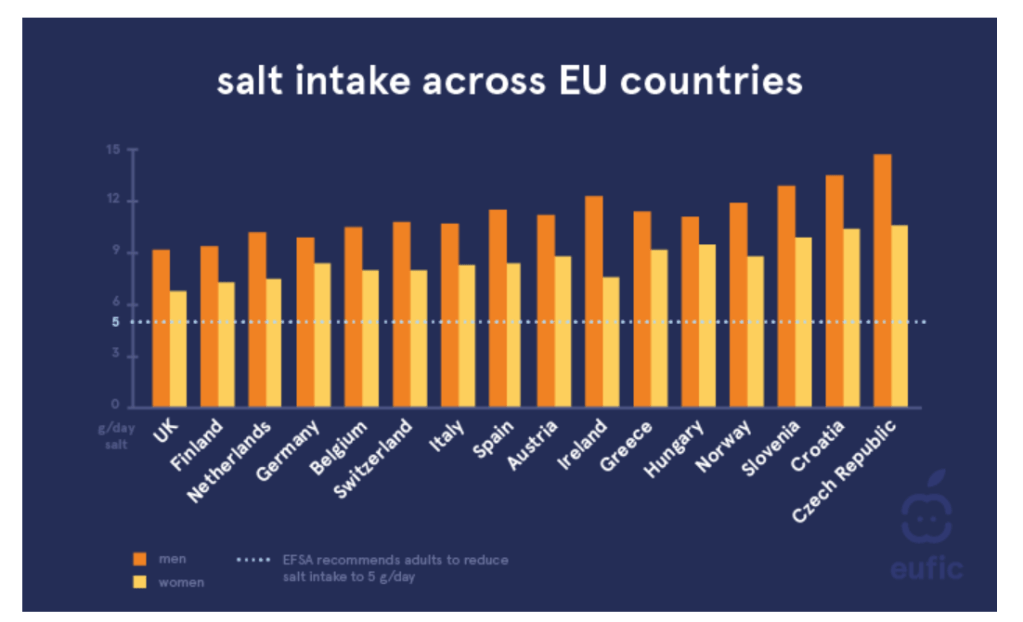
It’s Salt Awareness Week and here in the UK and in line with most of Europe [1] we are consuming more than the recommended intake of 6g by the UK government and 5g by the WHO, the current estimated average intake in the UK is 40% higher at 8.7g [2]. The biggest contributor of salt in the UK diet is white bread across all age groups, followed by bacon and ham for adults, sausage and cheese for children and soup for the elderly. Another major source is food consumed outside the home which according to Action on Salt can contribute to around 75% of salt intake, another good reason to try to cook from scratch as often as possible.
The importance of reducing salt intake is due to the direct impact it has on our blood pressure (hypertension). The kidneys normally regulate sodium and water levels in our blood but if we consume too much salt this balance is disturbed and an increase in sodium leads to the body retaining water in response, this in turn increases blood volume and increases stress on blood vessels and the heart, over time this can lead to cardiovascular disease, the leading cause of mortality and morbidity in the UK [3].
The positive news is that a change in lifestyle including maintaining a healthy body weight and staying physically active can influence our blood pressure. There is a large body of evidence that shows even very small reductions in salt intake (1/2 a teaspoon) can lead to a reduction in blood pressure [4]. The UK government estimated that a population average reduction of 1g/day of salt could prevent 4,147 premature deaths and save the NHS £288 million annually [2].
Tips to reduce your salt intake include:
Prepare food at home as aften as possible.
Reduce consumption of ultra-processed food.
Use herbs and spices instead of salt to season.
Check the labels of food carefully to try to spot high salt content.
Infographics – http://www.eufic.org

References
1. Turck, D., et al., Dietary reference values for sodium. Efsa j, 2019. 17(9): p. e05778.
2. Public Health England. National Diet and Nutrition Survey: Assessment ofsalt intake from urinary sodium in adults (aged 19 to 64 years) in England,2018 to 2019. 2020; Available from: www.gov.uk/government/statistics/national-diet-and-nutrition-survey-assessment-of-salt-intake-from-urinary-sodium-in-adults-aged-19-to-64-years-in-england-2018-to-2019.
3. Public Health England. Health matters: combating high blood pressure. 2017; Available from: www.gov.uk/government/publications/health-matters-combating-high-blood-pressure.
4. Huang, L., et al., Effect of dose and duration of reduction in dietary sodium on blood pressure levels: systematic review and meta-analysis of randomised trials. Bmj, 2020. 368: p. m315.
 MLT Nutrition