
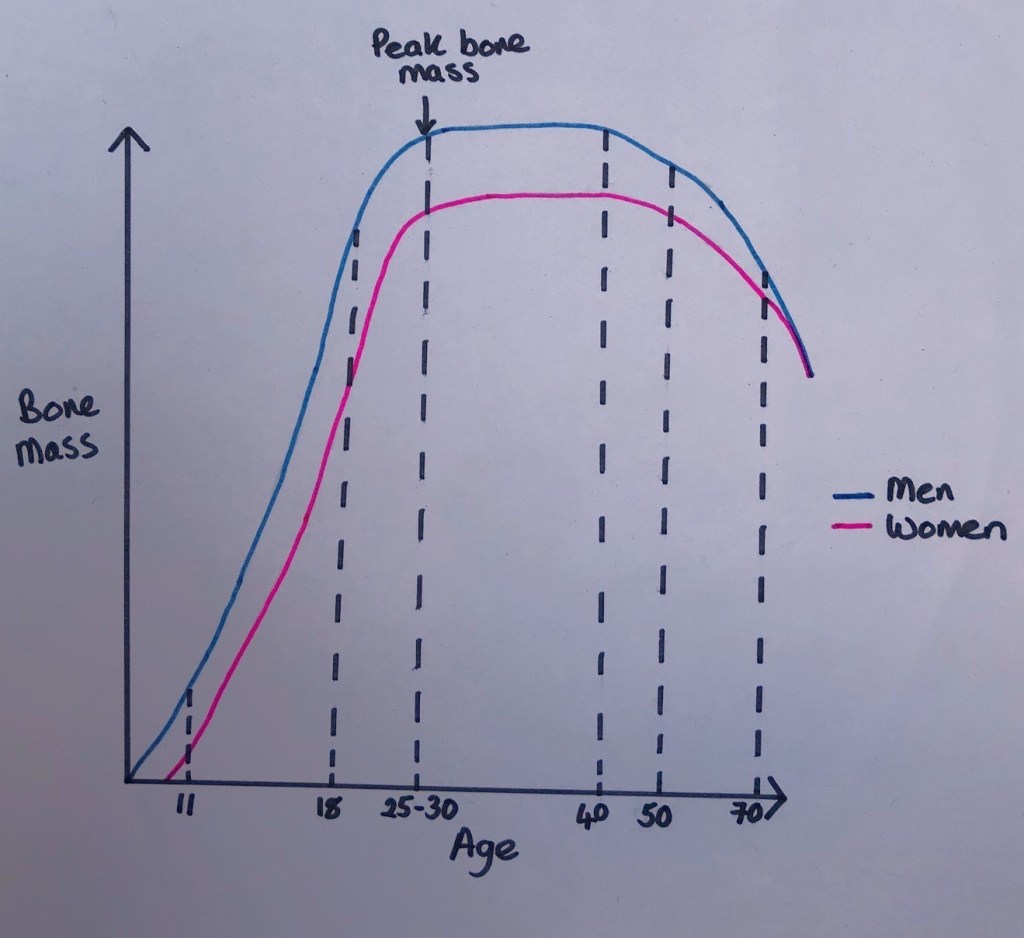
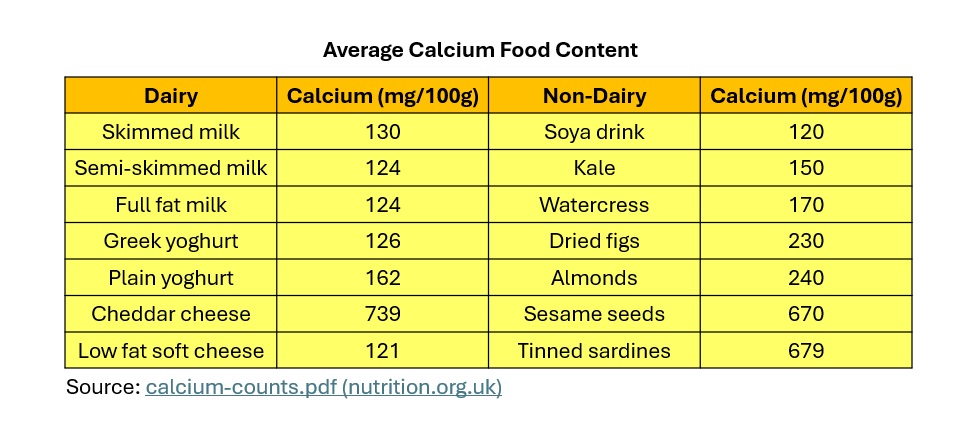
Bone density is built up during childhood, adolescence, and early adulthood when rapid growth takes place, it’s especially important that adequate calcium intake is achieved during this period. Peak bone mass normally occurs between the ages of 25 and 30 for both men and women, although men overall have higher bone density than women due to their greater bone width and size[1]. Achieving a high peak bone mass provides protection against osteoporosis and fractures later in life, it is determined via a combination of genetics and lifestyle factors[2]. Nutrition, physical activity, and alcohol consumption all have a major impact on bone density especially during the period of rapid growth and can seriously reduce peak bone mass. After the age of 40 bone mass slowly reduces and accelerates for women around the age of 50 when menopause starts and oestrogen levels drop, this can cause up to 40% loss of the spongy inner bone and 10% of the hard outer bone (https://orthoinfo.aaos.org/en/staying-healthy/healthy-bones-at-every-age/). Menopausal women should try to limit this impact by increasing their dietary calcium intake by around 20% from around 700mg/day to around 900mg/day as well as staying active and incorporating weight-bearing exercise such as running, walking and strength training. Post 70 years of age both men and women have a similar rate of bone mass loss and are at a similarly high risk of osteoporosis, it would be advantageous for men to also increase their dietary intake of calcium at this stage in line with women[1]. The best dietary sources of calcium are listed in the table below, dairy products such as milk contain some of the highest levels, but fortified soya milk is a good option as it contains the most similar nutrient content to dairy, ensure that it’s not organic as this cannot contain any additives. Leafy vegetables are another good source of calcium the only exception is spinach which contains calcium that is not easily digestible (www.ros.org.uk). Too much calcium can cause stomach pain and diarrhoea, so be careful if you decide to take supplements, 1500mg or less a day is unlikely to cause harm (www.nhs.uk/conditions/vitamins-and-minerals/calcium/).
1. Theobald, H.E., Dietary Calcium and Health. British Nutrition Foundation Nutrition Bulletin, 2005. 30: p. 237-277.
2. Seibel, M.J., Nutrition and molecular markers of bone remodelling. Curr Opin Clin Nutr Metab Care, 2002. 5(5): p. 525-31.

 MLT Nutrition