
The Eatwell Guide recommends that we eat two portions of fish a week, one of which should be oily. This is something a lot of us struggle to achieve so here are a few helpful facts to help encourage you to increase your consumption.
Why is it so important?
Oily fish provide the richest dietary source of long chain omega-3 fats, two important types are called Eicosapentaenoic acid (EPA) and Docosahexaenoic acid (DHA), these are made in your body but at low levels and at a very slow rate so it’s important that we ‘top up’ regularly via our diet. EPA and DHA both play important roles in many functions of the body such as heart, blood vessels, lungs, and immune and hormone regulation. DHA also plays a role in eye (retinal) and brain development in infants.
What kind of fish are oily?
Salmon, mackerel, anchovies, trout, sardines, kippers, swordfish are all good options and can be consumed fresh, canned, or frozen. Note – Tuna is no longer considered an oily fish option as it was discovered that it doesn’t contain the high levels of healthy omega-3 fats as other sources.
What constitutes a portion?
For adults, one portion is 140g this equates to a palm-size piece of fresh fish or a small can of tinned. For 18 months – 3 years this is ¼- ¾ small fillet, 4-6 years this is ½ small fillet, 7-11 years this is 1-1 ½ small fillets.
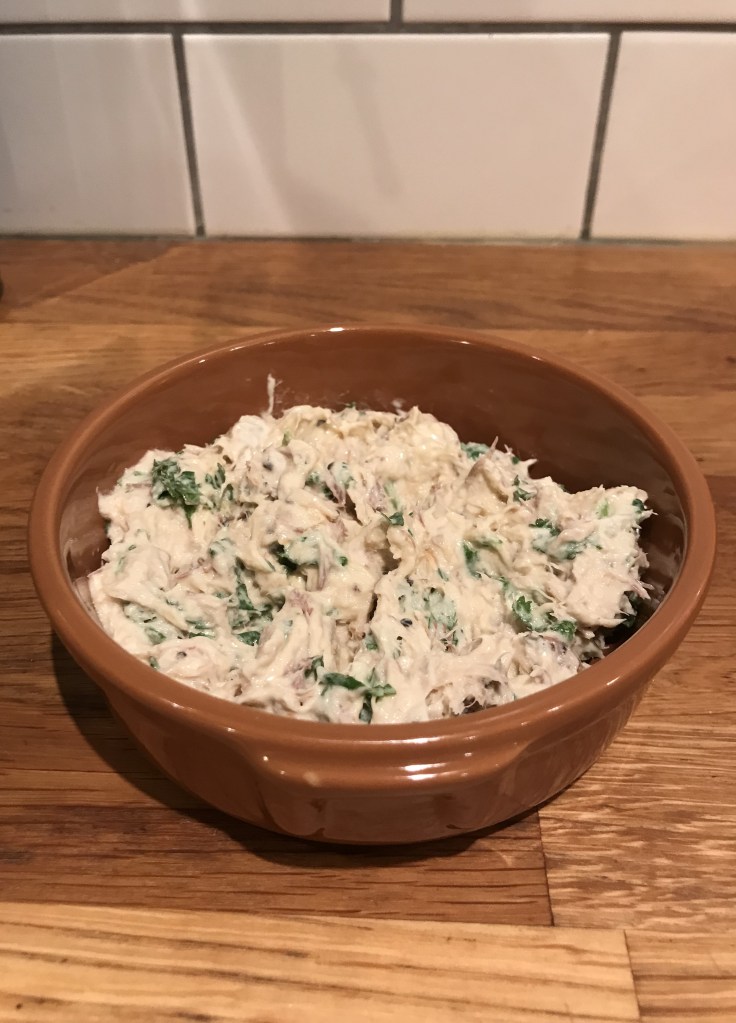
Tip – Peppered mackerel are available from most supermarkets at a reasonable price, they can be transformed into a tasty pate very easily by flaking into a bowl, adding a few tablespoons of Greek yoghurt, a squeeze of lemon then mashed with a fork to desired consistency, you could use a blender to form a smoother pate and the addition of herbs such as chives or coriander will boost it’s nutritional value.
 MLT Nutrition