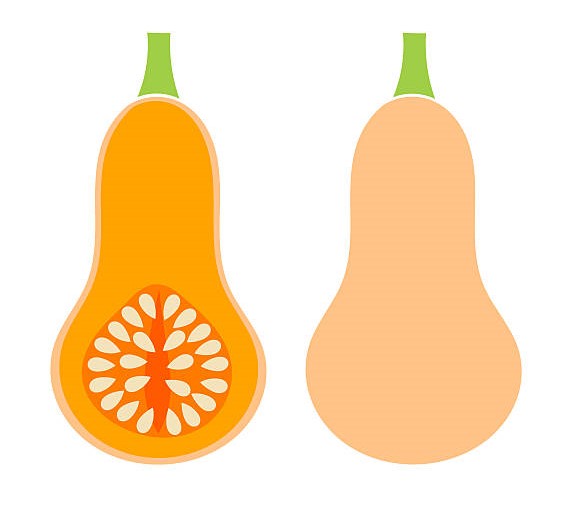
Butternut squash (BS) is currently in season and packed full of nutrients, it contains particularly high levels of Vitamin C; a portion of 80g provides 30% of the recommended daily intake [1]. One of the major roles of Vitamin C is maintaining cartilage and collagen production, something that can be of particular benefit as we age as our bone density deteriorates. Also found in high levels are beta-carotene and other carotenoids such as lutein, one of their functions is to help maintain healthy eyes and studies have shown that they may help prevent age-related macular degeneration [2]. Another study showed that consumption of a diet high in vegetables rich in Vitamin C and beta-carotene was positively associated with healthy bone density in post-menopausal women [3]. BS is also a good source of fibre, high in carbohydrates and filling to eat but, low in calories making it a great aid to weight management.
BS is reasonably priced (current average price is £1.50) and in order to make the most of it with minimal effort here is a 2-4-1 recipe idea:
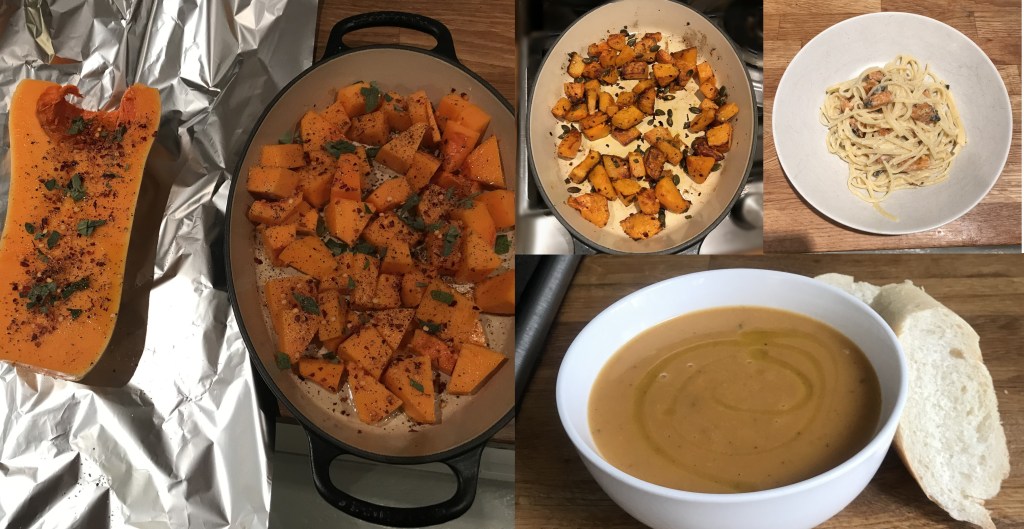
Half the BS lengthways and remove seeds, leave one as a half and cut the other into roughly cubes and place in a baking dish.
Drizzle both with olive oil, and sprinkle with chill flakes, chopped herb of choice (I like to use rosemary), sea salt and pepper.
Wrap the half in foil and place both in the oven @ 200⸰C for ~20 minutes for the cubed and ~40 minutes for the half BS.
Halfway through cooking the cubed BS add a sprinkle of pumpkin seeds.
Once cooked the cubed BS can be tossed into pasta along with parmesan, ricotta, and lemon juice or stirred into a basic risotto.
The following day scoop the flesh out of the BS half and add to a saucepan of stock, add a splash of milk and blend to required consistency, heat, season and serve drizzled with olive oil.
References
1. PHE, The Eatwell Guide. 2016: London, Public Health England.
2. Mitchell, P., et al., Age-related macular degeneration. Lancet, 2018. 392(10153): p. 1147-1159.
3. Kim, D.E., et al., Relationship between bone mineral density and dietary intake of β-carotene, vitamin C, zinc and vegetables in postmenopausal Korean women: a cross-sectional study. J Int Med Res, 2016. 44(5): p. 1103-1114.
 MLT Nutrition